
Transtoyou x Zazen Copenhagen
Why is it important to talk about menopause?
How to recognise the signs and know when it might be time to seek support
There are times in life when feeling tired, distracted or simply not quite yourself seems easy enough to explain.
Work is busy. There is a lot happening at home. You haven’t been sleeping well. You are taking care of everyone around you and somehow keep putting yourself at the bottom of the list.
So you tell yourself you’re stressed.
Maybe you need an earlier night, a quieter weekend, a holiday, more exercise – or perhaps you simply need to get better at saying no.
And sometimes, of course, stress really is the reason.
But sometimes something else is changing too.
Perimenopause can be much less obvious than many of us expect. There isn’t necessarily one clear moment when you suddenly realise what is happening. For many women, it begins with a collection of small, seemingly unrelated changes.
Your sleep changes. Your mood feels different. Concentration takes more effort. Your energy isn’t quite what it used to be. You suddenly feel unusually warm. Your period becomes shorter, longer, heavier, lighter or simply less predictable.
None of these things on their own necessarily means perimenopause. But when several changes start appearing together, it can be worth paying attention.

When menopause looks like stress
One of the reasons perimenopause can be so difficult to recognise is that hormonal changes and stress can look remarkably similar.
Both can affect sleep, concentration, mood and energy. Stress can also affect your menstrual cycle, making things even more confusing.
And the years when perimenopause often begins are not necessarily quiet ones. For many women, they are years filled with work, relationships, children, ageing parents, changing responsibilities and very little space left in the calendar.
So feeling exhausted or overwhelmed can seem completely logical.
We can become very good at explaining everything away.
We tell ourselves that we are simply too busy. That we need to sleep more, exercise more, take a holiday or somehow get ourselves back on track.
Sometimes we even start blaming ourselves for not coping as well as we used to.
But what if, instead of immediately trying to fix ourselves, we paused for a moment and became curious about what was actually happening?
That is something I believe strongly in through my work at ZAZEN.
Not in analysing every little sensation or turning your body into another project to manage. But in creating enough space to notice when something has changed.
How do you actually feel?
Has something changed in your body, your energy or your emotional wellbeing?
And has that change stayed with you?
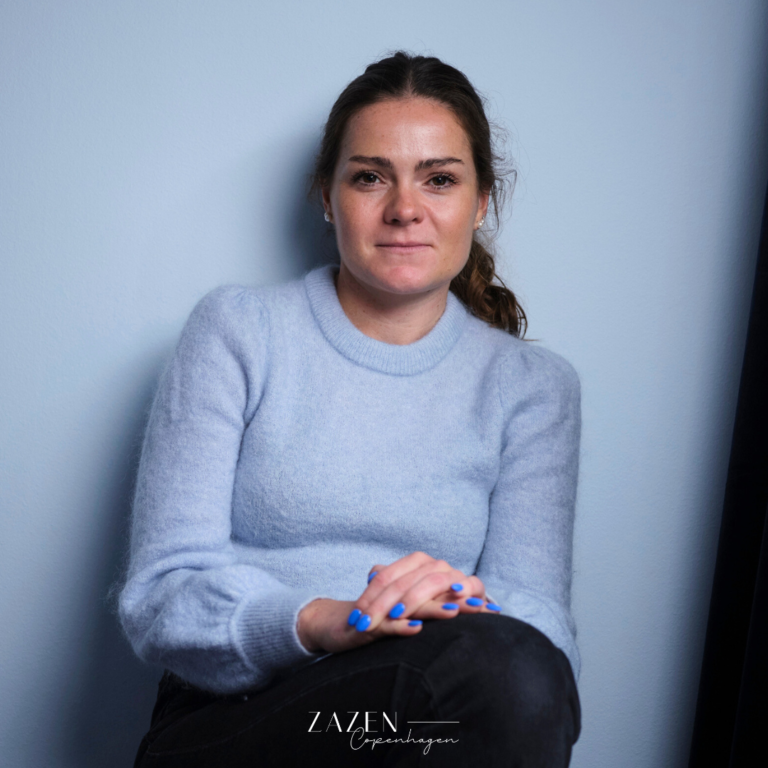
I know this from my own experience
My work with menopause is also deeply personal.
I am currently experiencing early menopause myself. And one of the things I have found important throughout this transition is learning to listen to my body rather than constantly expecting it to perform as it did before.
Being in early menopause has also strengthened my desire to talk more openly about something that can still feel difficult, lonely and under-discussed.
Because when you don’t know what is happening, it is very easy to think that something is wrong with you.
You may wonder why you suddenly feel different. Why your sleep has changed. Why your energy comes and goes. Why your body responds differently to things it used to tolerate.
Sometimes, simply understanding that there may be a hormonal transition happening can change the way you look at yourself.
Instead of thinking “Why can’t I cope?”, you can begin asking “What is my body trying to tell me?”
What is important during menopause?
Hot flushes are probably the symptom most people associate with menopause, but they are only one part of the picture.
You may notice changes in your menstrual cycle, sleep difficulties, night sweats, changes in mood, anxiety, brain fog, headaches, joint or muscle discomfort, vaginal dryness or changes in sexual wellbeing.
Some women experience many symptoms. Others notice only a few.
They also don’t necessarily arrive neatly at the same time. You can have weeks where you feel perfectly well and then suddenly experience a more difficult period again.
That unpredictability can make it difficult to know whether what you are experiencing is hormonal at all.
At the same time, it is important not to assume that everything happening in your body must be menopause. Thyroid problems, iron deficiency, medication, mental health conditions and other medical issues can sometimes cause similar symptoms.
This is where medical support has an important role.
Before trying to find a solution, it can be surprisingly helpful simply to observe what is happening.
How are you sleeping?
Has your cycle changed?
When does your energy disappear?
Do you notice hot flushes or night sweats?
Are certain situations suddenly much harder to deal with than they used to be?
Has your body started responding differently to alcohol, exercise, lack of sleep or an overly full diary?
You don’t need a complicated tracker or another app to manage your life. A few notes in your phone or diary can be enough.
Writing things down for a few weeks can sometimes reveal a pattern that is difficult to see when you’re in the middle of everyday life. It can also make a conversation with your doctor more useful.
For women using Transtoyou, symptoms and relevant health information can also be kept within the platform and shared directly with the doctor involved in their care. This can help connect what you are noticing in everyday life with the medical conversation.
At ZAZEN, awareness is an important part of this process.
Creating a little more space to notice what is happening in your body, your energy and your emotional wellbeing can be valuable in itself.
Not because rest, movement or mindfulness can make hormonal changes disappear.
But because it can be difficult to hear what your body needs when life never slows down.
For one person, that might mean going for a walk without listening to anything.
For another, it might be yoga, meditation or breathing exercises.
Someone else might need more sleep, strength training, less alcohol or simply a little less on their weekly schedule.
There is no perfect menopause lifestyle.
There is only learning to understand what you need.
There is enormous value in understanding your body, looking after your wellbeing and finding ways to support yourself through change.
But there are also questions that belong in a medical consultation.
Could these symptoms be related to perimenopause?
Could something else be causing them?
Would treatment help?
Could HRT be appropriate?
Are there reasons why a particular treatment might not be suitable for me?
These questions require an individual medical assessment.
Seeking medical help does not mean that you have failed to manage menopause “naturally”. And choosing medical treatment does not mean that sleep, movement, mental wellbeing, relationships and stress suddenly become irrelevant.
They are simply different parts of the same picture.
There is also no rule saying your symptoms have to become unbearable before you are allowed to ask for help.
If changes in your cycle, sleep, mood, concentration, temperature regulation, sexual wellbeing or energy are affecting how you feel or function, they are worth talking about.
This can be particularly important when symptoms appear at a younger age.
For many women aged 45 and over with typical symptoms and menstrual changes, perimenopause can often be recognised from the symptoms themselves without routine hormone testing. Hormone levels fluctuate considerably during this stage, so a single measurement does not necessarily provide the simple yes-or-no answer many people expect.
If symptoms appear at a younger age, however, the medical assessment can be different and further investigation may be appropriate.
And if you experience vaginal bleeding after you have gone at least 12 months without a period, it should always be discussed with a healthcare professional.
Hormone replacement therapy, usually shortened to HRT, can be one of the medical treatment options for symptoms related to perimenopause and menopause.
But HRT is not one single treatment.
There are different hormones, doses and ways of taking them, including patches, gels and tablets. What is right for one woman will not automatically be right for another.
Symptoms matter, but so do your medical history, other medicines, individual risk factors and whether you still have a uterus.
This is where the collaboration between ZAZEN Copenhagen and Transtoyou becomes especially relevant.
ZAZEN focuses on awareness, wellbeing and creating space around the physical and emotional changes that can come with menopause.
Transtoyou provides access to medical support for women who want to discuss their symptoms, possible causes and treatment options with a licensed doctor.
Through Transtoyou, women can speak with a doctor online about perimenopause or menopause symptoms and, where clinically appropriate, discuss treatment options including HRT.
The medical assessment and any treatment decision remain with the doctor and are based on the individual situation.
The two approaches therefore don’t compete with each other. They meet different needs.
Wellbeing support can help you become more aware of what is changing and find ways to feel more grounded during a transition.
Medical support can help answer questions about symptoms, diagnosis, safety and treatment.
Women’s health is sometimes presented as though there are two opposing options: change your lifestyle and manage things yourself, or use medicine.
But these things are not opposites.
Menopause is a natural stage of life, and symptoms can still be difficult.
You can respect what your body is going through while also wanting help with night sweats that are destroying your sleep.
You can practise mindfulness and use HRT.
You can make changes to your working life and speak to a doctor.
You can do yoga in the morning and still decide that medical treatment is right for you.
There should be room for all of it.
What matters is having enough information to understand your options and enough space to decide what feels right for you.
Not every difficult week is hormonal.
And not every night of bad sleep is perimenopause.
There is no need to search for a medical explanation for every change in your body.
But there is also no prize for ignoring yourself.
If you have been saying “I’m probably just stressed” for months while quietly knowing that something feels different, perhaps the question is worth revisiting.
Pay attention to what has changed.
Give yourself space where you can.
Talk about it.
And when something feels as though it needs a medical answer, ask for one.
Sometimes understanding what is happening starts with something very simple:
Allowing yourself to notice that something is happening.